


Key Takeaways
- Intense Aurora Borealis in Norway can be seen, due in part to the country’s high latitude and position directly below the auroral oval. Travel north for optimal chances.
- Go anytime from late September to early April, peaking around the autumn and spring equinox and polar night, and buffer your itinerary with extra days to increase your chances.
- Schedule outings on clear, dark nights around new moon phases and focus on 21:00 to 02:00 local time for the highest likelihood of sightings.
- Take Tromsø as a comfortable hub for guided tours, city comforts, and easy trips to dark fjords or opt for wild spaces like Senja, Svalbard, or Varanger for little light pollution against epic backdrops.
- Bring your winter gear and get ready for polar night. Intersperse indoor breaks with late-night viewing to remain snug and awake.
- Establish a dependable Ubigi eSIM data plan ahead of time so you can check the weather, aurora alerts, navigation, and post photos on the go.

Introduction
Aurora borealis in Norway, the beautiful natural light display you can observe across the northern parts. It swirls like green, pink, and violet curtains, with the movement of solar activity and clear, dark skies.
The optimal months are September to March, with the highest probabilities exceeding the Arctic Circle around Tromsø and Lofoten. You’ll discover guided tours, aurora forecasts, and handy advice further down in the post to map out clear, metric-based trips.
Aurora Borealis in Norway
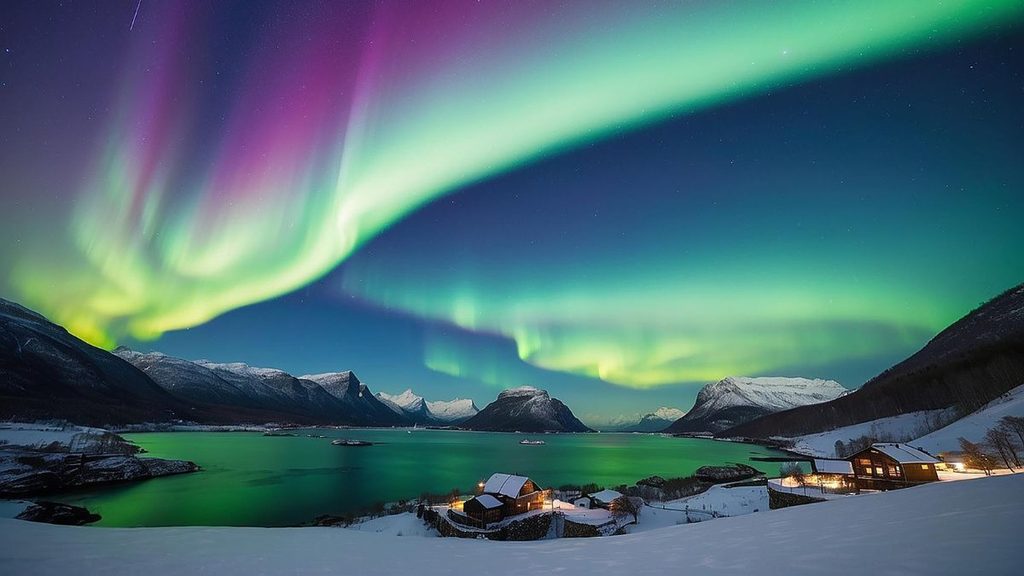
The aurora borealis is an iconic spectacle in Norway’s arctic sky, with green, pink, and purple curtains sweeping and pulsing overhead. Due to Norway’s high latitude and its location directly beneath the auroral oval, you can frequently observe fierce displays here. You can witness the lights from anywhere dark above the Arctic Circle, and spots like Tromsø, Alta, and the Lofoten Islands have long been favorites for clear skies and low light pollution to make the colors really pop.
You need to schedule your travel during late September to early April. Those months provide the long nights and regular clear skies you require. The Polar Night gives extended darkness, and the aurora most often appears between 18:00 and 02:00 local time, with peak activity often late evening.
New moon windows provide the blackest skies and increase your likelihood of an intense sighting, so consult lunar phases when selecting dates. Anticipate change. Aurorae are powered by solar wind and magnetic activity, so strength and frequency vary rapidly. These can be faint green glows starting low on the horizon, turning into full-sky swaths.
Sometimes you will observe quick rays, bands that double up, or gently drifting diffuse curtains. This volatility implies you must construct multiple nights into your schedule and take advantage of local predictions and notifications to maximize chances. Cultural threads run through it. Norwegian folklore imbued the lights with reverence and tale.
Now the lights sustain northern tourism and local existence, underpinning guides, boutique lodges, and photography expeditions. For optimal viewing, select remote coastal or inland locations with unobstructed horizons, dress warmly in layers, and keep your nights open. The best sightings are usually a reward for patience and minimal scheduling.
Best Time to See the Aurora Borealis in Norway
Your prime window for aurora hunting extends from late September through early April. These months provide longer nights, lower solar elevation, and increased hours of prime sky-watching. To maximize the viewing of this phenomenon, clear, dark nights are a must, so it’s best to plan around new moon dates and steer clear of towns and street lights for optimum contrast.
1. Autumn Equinox
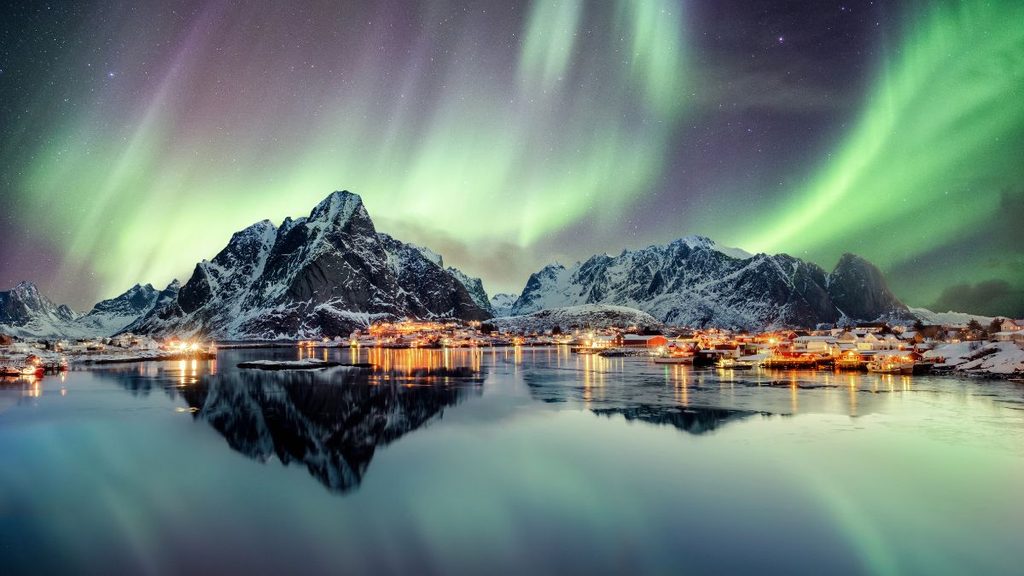
Late September delivers the autumn equinox that frequently amplifies geomagnetic activity with the equinox effect, increasing your likelihood of robust shows. September and October bring more mild temperatures and colorful landscapes, allowing you to combine aurora-chasing with daytime fjord drives or hikes.
Tours run all the time during this window, and you can expect geomagnetic storms to become more frequent, so you could see more vivid curtains and fast movement.
2. Polar Night
Polar night occurs in parts of northern Norway when the sun remains below the horizon. From late November to mid-January, you have the longest, darkest nights for sustained aurora viewing and long exposure photography.
The absence of daylight means you can pursue the lights at any hour, but you’ll need to pack insulated layers, a heavy parka, thermal liners, and brace for slick roads and frigid temperatures.
3. Spring Equinox
Activity sees another peak at the spring equinox in March. Late February through early April combines more daylight with powerful auroral potential. Snow still lays on the ground, which aids foreground photography.
Book tours around the equinox dates for a better chance at intense displays and leave your nights flexible to capitalize on clear skies.
4. Lunar Phases
New moon periods provide you with the darkest skies and highest contrast for the aurora. Full moons drown out weak displays and degrade photographic quality.
Consult a lunar calendar when you schedule and target moonless nights for the best viewing and long exposure photos.
5. Peak Hours
Peak viewing hours are roughly 21:00 to 02:00, with highest activity often near 23:00 to 01:00. Be vigilant during these hours, sign up for guided tours timed to peak windows and take warm indoor breaks between excursions to recharge for late night hunts.
Aurora Borealis Tromso Norway
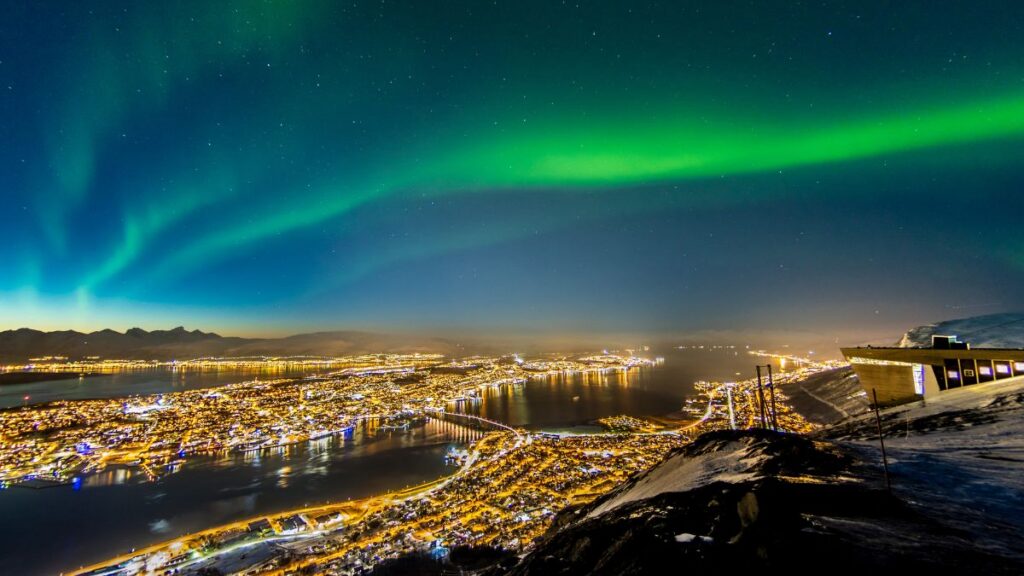
Sitting high above the Arctic Circle, Tromso is one of the best places in the world to experience the aurora. Nights extending from late September to early April provide long, dark windows. You could virtually catch a glimpse of the lights for eight months of the year. Clear skies, low light pollution, and frequent geomagnetic activity make Tromsø a convenient center of northern lights travel.
Downtown is accessible, but it is not the best place to see them. You’ll have to venture out to darker areas or take a guided tour.
Urban Accessibility
Tromsø’s small center keeps hotels, restaurants, gear shops, and pick-up points all within walking distance, so you can relax, warm up, and do it all again with minimal downtime. There are minibus tours that literally chase clear skies, as well as scheduled bus tours, private car rentals, and taxi transfers.
Local guides and trusted companies operate excursions every night during peak season. They track forecasts, select dark locations to view the lights, and even offer photography assistance. There are plenty of mid-range and higher-end hotels that offer their aurora guests wake-up calls and thermal suits.
By staying in Tromsø, you get city comforts and immediate access to isolated viewing locations once the skies shift.
Surrounding Fjords
The area’s fjords and mountains provide dramatic foregrounds for the aurora. Coastal peaks, smooth water, and snow fields bring layers to images. Ersfjordbotn, Kvaløya, Sommarøy, and the Lyngen Alps nearby all limit light pollution and provide expansive views for the camera.
Combine sea air and unobstructed horizons on a fjord aurora cruise or safari, or enjoy gliding dogs and reindeer sleigh rides that come to a close beneath the sky. February and March tend to present the most ideal combination of snow cover and re-emerging daylight, though clear nights are still the primary prerequisite for powerful displays.
| Feature | Notes |
|---|---|
| Location | Above Arctic Circle — high aurora activity |
| Best months | Late Sep–Early Apr; Feb–Mar excellent |
| Tours | Bus, minibus, boat, dog sled, reindeer sleigh |
| Nearby spots | Ersfjordbotn, Kvaløya, Sommarøy, Lyngen Alps |
| Amenities | Hotels, guides, photo help, wake-up calls |
Remote Viewing Locations
Remote corners of northern Norway offer you the greatest opportunity to witness the aurora borealis in its most brilliant, unbroken glory. Low light pollution, expansive horizons and geography that assists in dispelling clouds make these locations perfect. Anticipate partial access, frigid temperatures and having to bunk for a few days, usually four to eight, to increase your chances.
More on that later, but here are our top remote viewing spots, drool-inducing locations for serious aurora hunters and photographers.
Senja Island
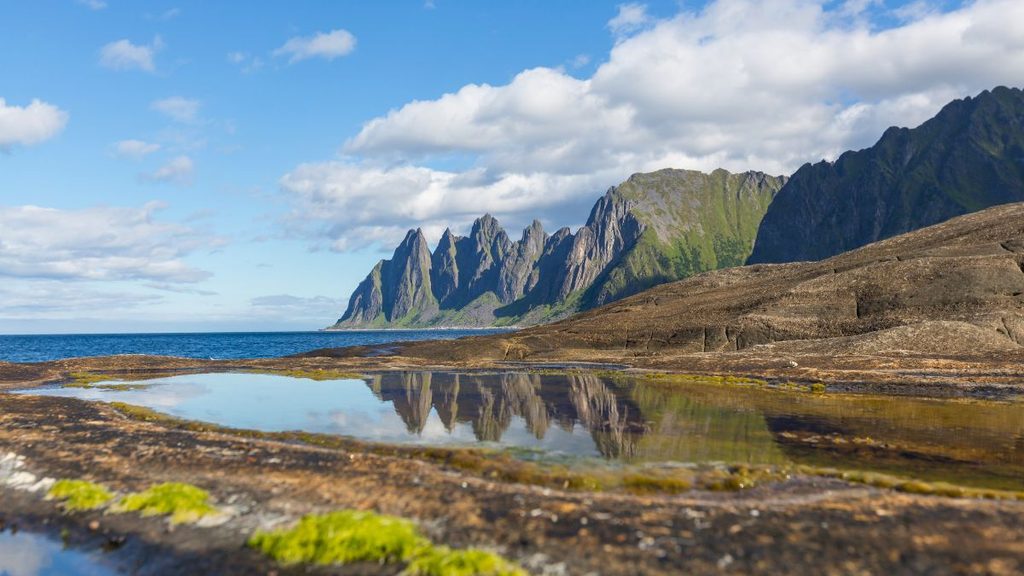
Senja, Norway’s second-largest island, has steep fjords, jagged peaks, and coastal roads to hushed bays. Low population density means low light pollution, so you can pitch a tripod without stray glow in the frame. As with the other locations, many of the viewpoints are situated beside lakes or fjords.
Water reflects the lights and the surrounding mountains can draw low cloud away, aiding visibility. Drive the National Tourist Route to beaches and headlands that face north for clear sky arcs. Senja is perfect if you want a combination of aurora photography along with a dose of arctic wilderness.
Svalbard Archipelago
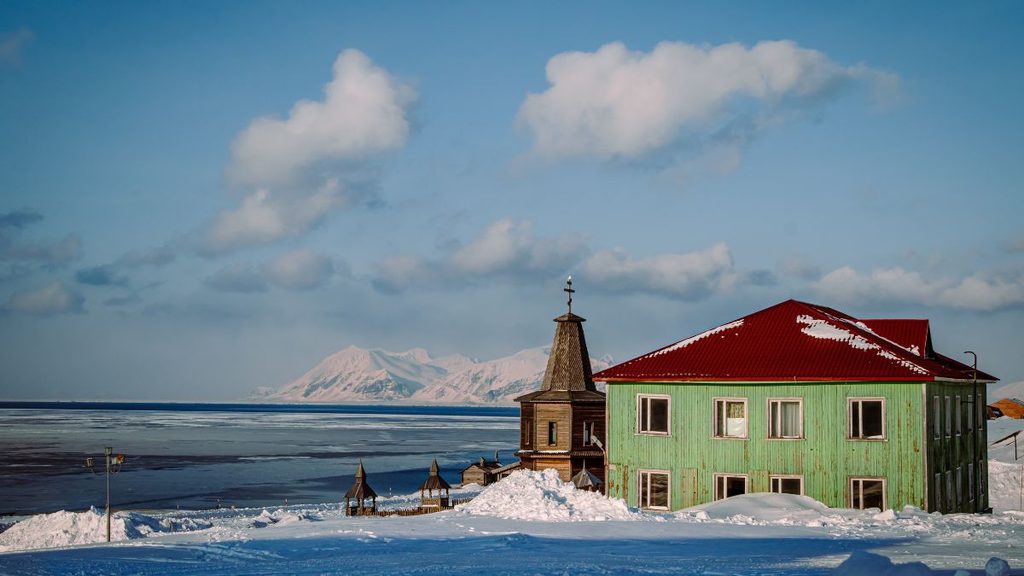
Svalbard is positioned far above the Arctic Circle. During polar night, when the sun doesn’t rise, you can witness auroras even during daylight hours. The archipelago is remote.
Glaciers, polar bears, and research stations define the landscape and access. Weather is brutal and fickle, so outings must be well laid out and guided. Anticipate once-in-a-lifetime aurora moments, but cold-weather flus and last-minute itineraries to pursue clear skies.
Varanger Peninsula
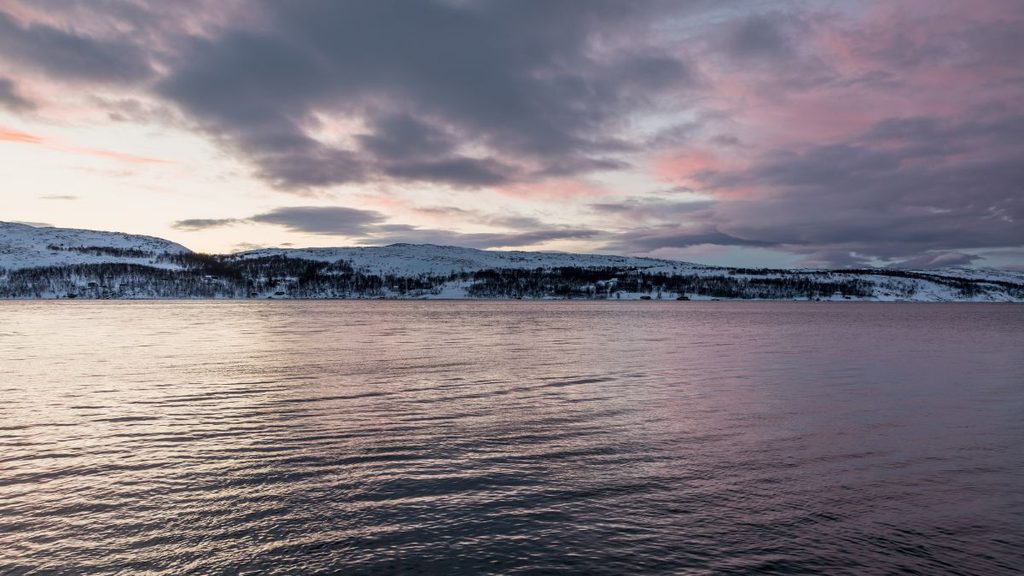
Varanger on Norway’s northeast tip offers you very vast skies and minimal light from remote villages. The peninsula has great aurora statistics and open tundra that facilitates horizon-to-horizon viewing.
Mix in aurora hunting nights with birdwatching and Sámi visits during the day for a more well-rounded trip. Access is restricted in winter, so schedule extended stays to outpace weather cancellations.
Travel Connectivity with Ubigi eSIM

Reliable mobile data is especially useful when chasing the aurora borealis in Norway. Weather and cloud cover can change quickly, so staying connected helps you check aurora forecasts, navigation apps, and tour updates while on the move.
With a Ubigi eSIM for Norway, you can prepare your mobile data before departure directly from the app and connect when you arrive without searching for a physical SIM card. This is particularly convenient when traveling between northern destinations such as Tromsø, Alta, and the Lofoten Islands.
Use your connection to monitor cloud cover, check aurora alerts, navigate between viewing locations, and communicate with tour operators. You can also stay connected to share northern lights photos during your trip.
Download offline maps as a backup, carry a power bank for long nights outdoors, and choose a Ubigi data plan that matches your trip length and expected data use.
Conclusion
Witness aurora borealis in Norway with solid itineraries and basic equipment. Choose months from late September to early April for the best chances. Opt for Tromsø for tours and quick getaways. Opt for remote locations such as Senja or Lofoten for peaceful skies and expansive views. Pack a warm jacket, extra batteries, and a camera with the ability to set long exposures.
Follow solar activity with a trusted app and monitor local weather every evening. Anticipate cold, late nights and rapid flashes of light that race across the sky. Reserve accommodations close to your selected viewing site to minimize travel. Be prepared to hunt the lights! Begin by securing dates and a local guide.

Frequently Asked Questions
When is the best time to see the Aurora Borealis in Norway?
Optimal is late September to early April, peaking from October to March. Nights grow long and skies turn around, increasing your odds.
Where in Norway gives the highest chance of seeing the Northern Lights?
Northern Norway above the Arctic Circle, Tromsø, Alta, and Lofoten, presents the best odds with clear, dark skies and frequent auroral activity.
How long should you stay to increase your chances of seeing the aurora?
Plan 3 to 5 nights. This window optimizes the weather sweepstakes and your chances without cramming too much into your trip.
Do I need a guided tour to see the aurora?
You don’t require a guide. Tours improve your chances. Guides track weather and KP forecasts and drive to clear-sky locations, sparing you the time and effort.
What should you pack for aurora viewing in Norway?
Bring warm layers, waterproof outerwear, insulated boots, gloves, and a tripod for your photos. Hand warmers and a headlamp come in handy.
Can you photograph the aurora with a smartphone?
Sure, today’s smartphones can capture the aurora using long-exposure or night-mode apps. For optimal shots, use a tripod and manual camera settings if you can.
How reliable is the aurora forecast and how should you use it?
Aurora forecasts (KP index, cloud cover) help but aren’t foolproof. Use them every day and mix with local weather reports for optimal planning.





 How to check eSIM compatibility
 How to check carrier unlocking