


Summary
Key Takeaways
- For Namaqualand Flower Season in South Africa, the bloom is contingent on the erratic winter rains and peak displays are fleeting a few weeks each year. Check local flower reports and reserve flexible accommodation.
- The crucial factor in all of this is timing and weather. Visit mid-morning to early afternoon on sunny days for fully open blooms, and check forecasts to hit displays at their peak.
- Explore highlights such as Namaqua National Park, the Namaqualand Flower Route, Nieuwoudtville, and West Coast reserves for diverse species and landscapes.
- Enjoy the fields from the car for range, on foot for immersion, and with a camera for macro and landscapes. Take hard shoes, sunscreen, and gravel road ready equipment.
- Access live bloom reports, maps, weather, and safety communication with a reliable eSIM data plan. Download offline maps for low-coverage areas.
- Make a must-see flower species checklist, stop and smell the pollinators, and mix flower gazing with local culture for a more flavorful journey.

Introduction
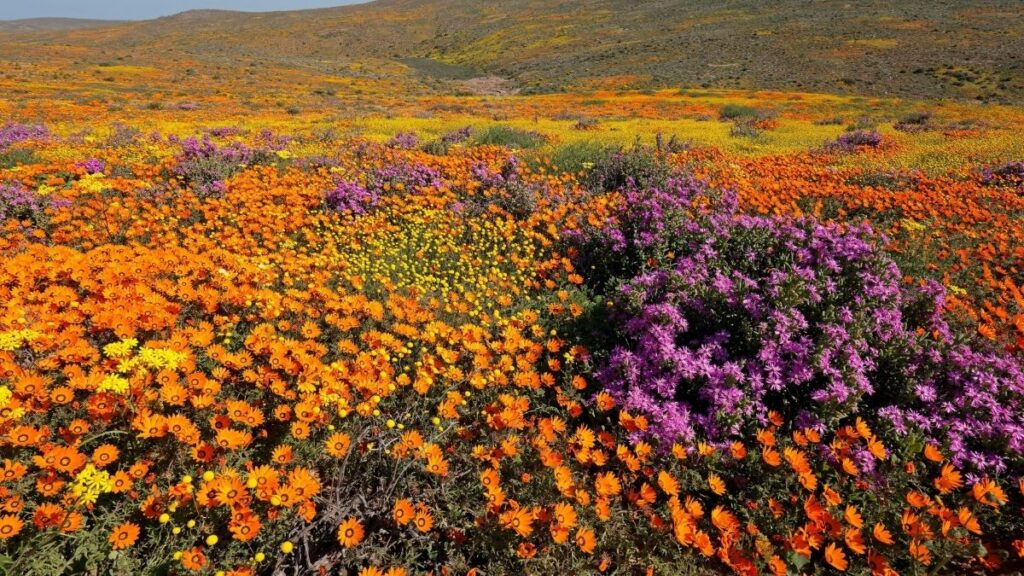
Each year, winter rains transform the west coast of South Africa and southern Namibia into a spectacular natural display. Millions of wildflowers bloom across the landscape, carpeting fields in vibrant shades of yellow, orange, pink, and purple.
The peak bloom typically lasts two to four weeks, although timing and intensity depend on rainfall and location. Local roads, small towns, nature reserves, and walking trails offer plenty of opportunities to get close to the flowers and capture memorable photographs.
This guide covers the best time to visit, recommended routes, top viewing spots, and practical tips for making the most of Namaqualand’s spectacular flower season.
What is the Namaqualand Flower Season?
The winter rains paint the dry land of Namaqualand with a bright wildflower tapestry. Spurred on by consistent May to July rains and cool late winter and spring temperatures, dormant seeds and bulbs come out of their slumber and blankets of brilliant color emerge, covering plains, valleys, mountains and coastlines.
The season usually extends from the Friday before the last weekend in August and lasts until the first week in October with peak blooms occurring in early to mid-August.
1. The Transformation
Following months of parched, brown landscape, reliable winter rain triggers a sudden transformation. Fields that appeared barren in summer are thick with blooms within days. Millions of flowers, including daisies, succulents, and bulbous geophytes, burst forth to create sweeping bands of color that are visible from low ridges or a coastal drive.
Timing matters. If temperatures climb too soon or rains fall poorly, the window can shrink to only a few weeks, so plan visits with that fragility in mind.
2. The Flowers
You will find a wide variety of indigenous species: iconic Namaqualand daisies, lachenalias, sparaxis, and many rare geophytes adapted to arid winters. Create a checklist of must-see species before you arrive.
Nieuwoudtville typically provides an extended season of approximately six weeks, making it a convenient hub if you desire additional time to view. Orange, yellow, white, and purple are vivid colors and the further north you go, the stronger the displays, with less toward Cape Town.
3. The Scent
There is a sweet, earthy aroma in the air, most potent after dew or light rains in the morning. That aroma attracts bees, butterflies, and birds, boosting local biodiversity and rewarding close-up observation.
Stop in thick clusters to enjoy it. Flower scent and bee hum alike characterize the season’s aural-haptic appeal.
4. The Rarity
The display is brief and uncertain. The intensity is based on rainfall and timing, so every year is different. Hard storms may devastate blooms, but consistent winter rain presents optimal outcomes.
Locals reserve lodgings months in advance as the demand surges.
When to Witness the Bloom
Namaqualand’s flower season is dictated by winter rains, local temperatures and sunlight. Timing varies from year to year, so consider posted dates a guide, not a promise. Here’s a handy matrix of typical timing ranges and their variation.
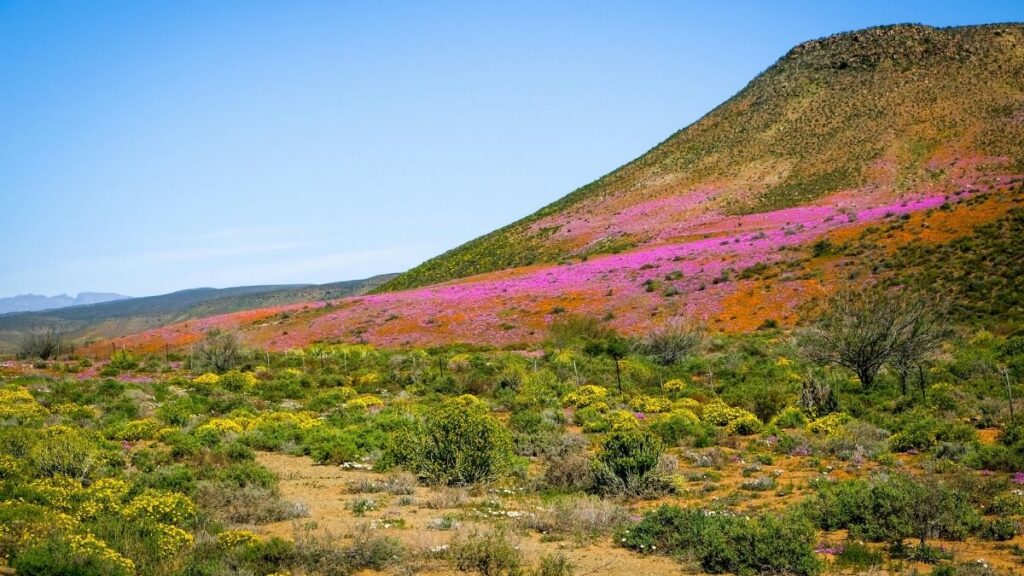
Consult local bloom reports and tourism updates prior to your trip. Flexible plans and adjustable bookings improve your chances of experiencing some serious blossom power. Lower-lying inland areas tend to warm first and are likely the first places to bloom ahead of the coast and higher-altitude sites.
The Rain’s Role
Regular winter rains must fall to trigger seed germination and mass bloom. If rains are late or infrequent, the season can be late in starting or low in output. Various locations in Namaqualand react to local rainfall, so the blooms can be staggered across the area.
Follow seasonal rainfall reports and regional weather maps to determine where germination was heaviest and where you’re likely to see the best bloom.
The Sun’s Call
Flowers open fully on sunny days, so a visit between mid-morning and mid-afternoon, when colors peak, is best. Wildflowers typically will not bloom until it is around 16 °C with the sun shining. Blooms close and look muted in overcast or rainy weather.
For photographs and viewing, choose bright, sunny windows and be willing to postpone visits a day or two in either direction for more optimal light.
The Annual Gamble
Every year is different, and no peak date is guaranteed. Book accommodations and tours with flexible cancellation and rebooking. Other years with weak rainfall exhibit only modest displays.
Pack patience, remain flexible, and embrace the fact that even a small bloom can uncover special species and patterns.
Where to Find Namaqualand Flowers
Namaqualand’s bloom follows a clear pattern: flowers start to appear in late July to early August in the Northern Cape, move south through Nieuwoudtville and the Cederberg, and reach the west coast by the end of August. Peak displays are typically in August, propelled by winter rains, but the season may run from June to October.
Namaqualand National Park
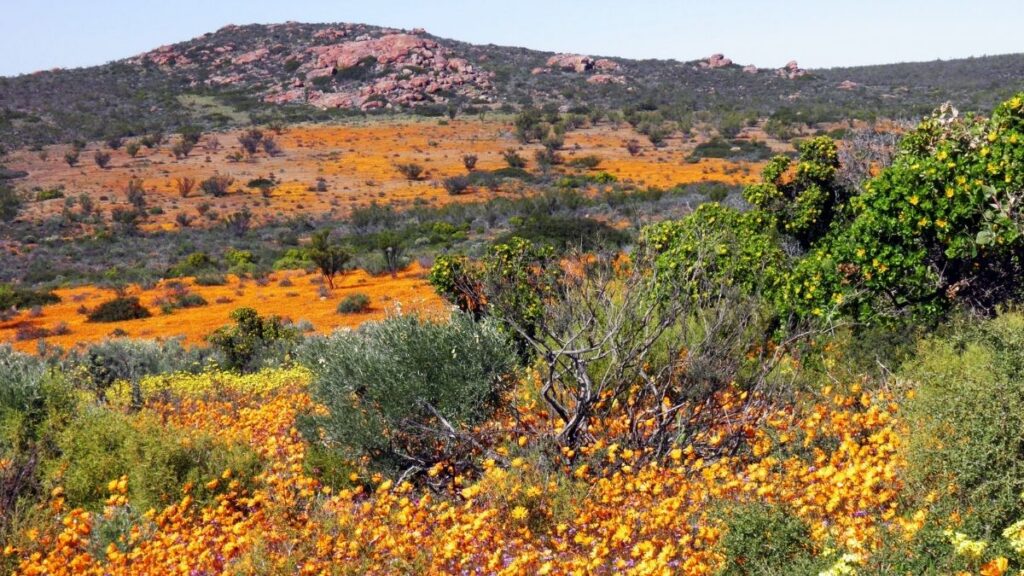
Namaqualand National Park, positioned at the heart of the region, provides the opportunity to feast your eyes on hectares of flower-stuffed expanses. Goegap Nature Reserve is 15 km outside Springbok and encompasses the Hester Malan Wildflower Reserve, perfect for targeted viewing.
Skilpad Wild Flower Reserve within the park produces wild carpets of intensely colored daisies and other annuals in good years. Trails range from leisurely walks to more extended hikes, with picnic areas and opportunities to observe small mammals and avian species.
Come early for parking and quiet fields prior to busloads of tours arriving.
The Namaqualand Flower Route
The Namaqualand Flower Route connects Springbok, Kamieskroon and Garies, offering a wide variety of landscapes and species. Plot your stops against each other to compare coastal strips, inland plains and mountain passes, each displaying different blooms and succulents.
Either take guided day tours for plant ID and the local context or drive yourself at a sedate pace to photograph the diverse displays. The trail is reachable from Cape Town and accommodates multi-day drives.
Nieuwoudtville
Nieuwoudtville, the “bulb capital,” is renowned for geophytes like amaryllidaceae and lachenalias. Hantam National Botanical Garden conducts guided walks and is a good source for rare plants.
The region’s valleys are lush oases in an otherwise semi-arid land, which means accommodations go quickly, so reserve well in advance during peak season.
West Coast
West Coast National Park and Postberg Nature Reserve are great spring sites. Postberg is open just in August and September. The west coast is near Cape Town, so it accommodates day trips or weekend stays.
Follow the West Coast Flower Hotline or Facebook for live bloom updates and find extra stops in nearby Darling and Langebaan.
How to Experience the Spectacle
Schedule to hop between sites and chase the finest local conditions. The prime period is about mid-August to mid-September, moving around with winter rains. Flowers can bloom from late July in the far north, before progressing south through Nieuwoudtville and the Cederberg. Sunny days and visits between 10:00 and 15:00 give the best light for viewing and photographing.
Longer excursions incorporating Namaqua National Park, Goegap Nature Reserve, and towns around Springbok provide the most comprehensive blooms and wildlife encounters including aardwolves and African wildcats.
By Car
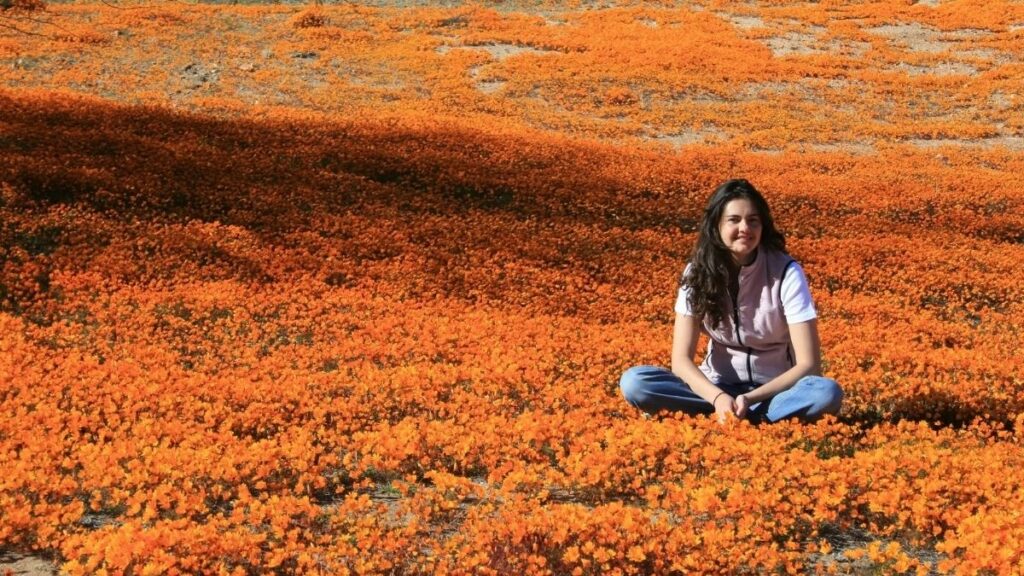
Self-drive routes allow you the flexibility to pursue the finest patches post-rain and hop between Namaqua, Goegap and Springbok. If you’re keen on seeing the spectacle for yourself, rent a car with higher clearance for gravel and remote lanes, cart some extra fuel and a quick repair kit.
Pause frequently at designated wildflower stops and picnic sites to stretch your legs and examine flowers up close. Car travel allows you to take camera equipment, water, snacks and layers for the weather.
On Foot
Opt for hikes in Goegap or Skilpad to enjoy a slower, more tactile experience on which the small species display best. Guided walks provide botanical context and assist you in identifying more subtle plants and native wildlife.
Be sure to wear sturdy shoes and sun protection because the terrain is uneven and sun exposure is intense. Pack a field guide or identification app to keep track of species as you go.
Through a Lens
Shoot between 10:00 and 15:00 for bright colors. Golden hour creates deep and softer hues. Use a macro lens to capture petal textures and pollinators, and create a photo journal to document seasonal variation.
Do aerial shots or wide panoramas to demonstrate scale. Please respect the regulations and rules regarding wildlife disturbance. Try vantage points from roads, ridgelines, and picnic sites for different frames.
Stay Connected During Namaqualand Flower Season

A reliable Ubigi eSIM helps you stay connected throughout Namaqualand without relying on public Wi-Fi. With mobile data available on the go, you can check daily flower bloom updates, weather forecasts, road conditions, and local alerts while exploring the region.
Use GPS and digital maps to find the best flower-viewing spots and navigate remote roads. Saving offline maps before heading into areas with limited coverage can also help you stay on track.
Your connection is also useful for booking last-minute accommodation or excursions, especially during the short peak blooming period when availability can change quickly. You can also keep family and friends updated and instantly share photos and videos of the colorful landscapes.
Set up your Ubigi eSIM before departure, directly from the app, and enjoy convenient mobile connectivity throughout your flower-season adventure, whether you’re exploring South Africa or crossing into southern Namibia.
Conclusion
Namaqualand flower season in South Africa is a vivid, brilliant display of color on a vast, barren expanse. The best bloom is in August or September. Travel the coastal path or venture inland to private reserves. Walk a short trail, opt for a guided grassland tour, or park at a view point and just sit with a camera. Use local weather and road reports to time your visit. Imagine bright orange, yellow, and purple carpets spread under clear blue skies.
Pack rock-solid shoes, sun protection, and ample water. Reserve accommodations well in advance and opt for flexible travel dates. Namaqualand flower season. Ready to see the bloom? Select your dates and begin booking today.

Frequently Asked Questions
What months are best to see the Namaqualand flower season?
The flower season is normally around August to September. Timing depends on winter rains, so August to early October is when you can count on them the most.
How long does the flower display typically last?
The primary show lasts two to six weeks. Rain and temperature dictate the precise length, so be flexible and watch local forecasts.
Where should you go for the biggest flower fields?
Discover Namaqualand, from Springbok to Nieuwoudtville to the coastal Namaqualand by Hondeklip Bay. These provide the broadest wildflower carpets.
Do you need a permit or guide to visit flower areas?
Most fields are on public or privately managed land open without permits. It’s possible that some of these reserves will charge entrance fees or only offer access via guided tours. Consult the local authorities’ websites before traveling.
What should you pack for a Namaqualand flower trip?
Pack solid shoes, sun protection, layers, water, and a good camera. Of course, bring a charged phone and portable power bank for navigation and photos.
Can you see animals while visiting the flowers?
Yes. You might see birds, small mammals, and insects. Observe animal distances and remain on paths to preserve habitats and your safety.
How can modern connectivity improve your experience?
Mobile maps, weather updates and local tourism sites help you find blooms in real time. Bring data or a local SIM to optimize timing and routes.









 How to check eSIM compatibility
 How to check carrier unlocking