


Key Takeaways
- Located in the north of the country, the Serengeti Plains in Tanzania are a component of an extensive ecosystem that serves as crucial habitats for wildlife and sustains the globally renowned migration of herds of wildebeests and zebras.
- The diversity of animals and birds in the Serengeti is astounding. They are all specially adapted to the grasslands and have their roles in the balance of the ecosystem.
- The optimal season for wildlife is the dry period of June to October, while the wet season of November to May provides greenery and emptier parks.
- Top experiences are game drives, hot air balloon safaris, wildlife photography and Maasai village tours, supported by efficient logistics and guided safaris.
- To ensure a trip well done, book safaris in advance, pack neutral clothing, bring binoculars and camera equipment, and brace for minimal internet connection in the wilderness.
- Dependable mobile data and eSIM solutions such as Ubigi support you in remaining connected, navigating your travel logistics, and broadcasting your adventures during your journey through the Serengeti.

Introduction
The grassy Serengeti Plains in Tanzania. You encounter vast skies, vast plains and herds of animals roaming the plains, such as wildebeest, zebras and lions.
Each year, thousands of animals roam during the migration, attracting visitors and scientists from across the globe.
To understand what defines these plains as different, discover the land, the wildlife and the local lifestyle.
What Are the Serengeti Plains?
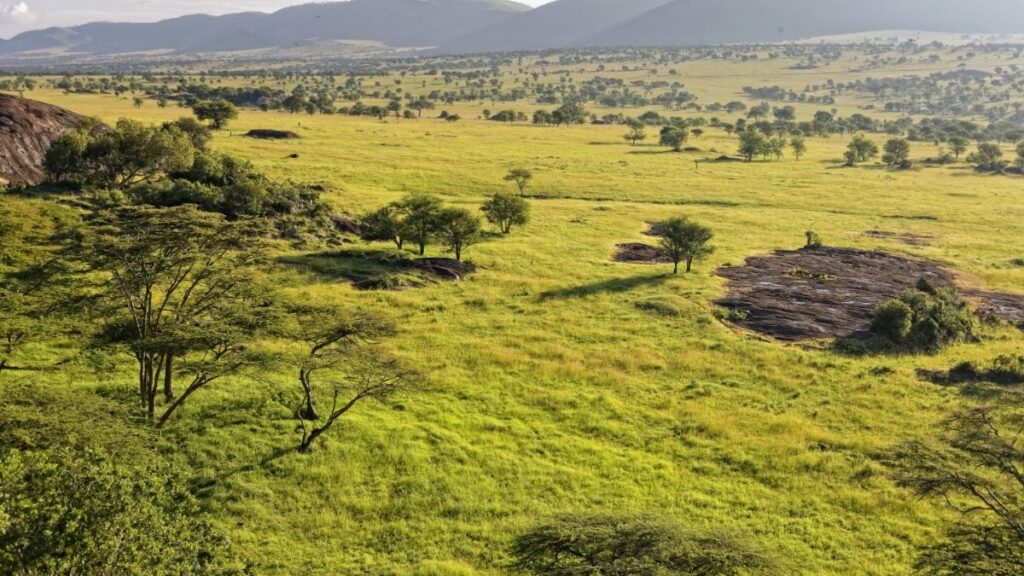
The Serengeti Plains rest in northern Tanzania, near the Kenyan border. They constitute the larger Serengeti ecosystem, which spills over into the Maasai Mara. The plains extend over the Mara and Arusha regions of Tanzania. They span the southern one-third of the Serengeti National Park and constitute a large portion of what comes to mind when you imagine African grasslands.
‘Serengeti’ is a Maasai word meaning ‘endless plains.’ It’s a name that fits because what you find is a vast, flat grass sweep extending as far as the eye can see punctuated by the occasional tree or rocky outcrop known as kopjes. It looks like forever.
These plains rest at an elevation ranging between 920 and 1,850 meters. Temperatures range from 15 to 25 degrees Celsius, so weather is mild for most of the year.
It’s not just grass here, there’s a mix of habitats. You will encounter spots of riverine forests, swamps, and woodlands. These little pockets introduce greater diversity and provide space for various flora and fauna.
The plains have approximately 70 large mammals, including elephants, giraffes, buffalo, and hippos, and almost 500 species of birds. Each grazer, whether wildebeest, zebra, or gazelle, nibbles a bit differently, so they don’t overlap in the forage they consume. This enables such vast numbers of so many species to co-exist in one place.
The Serengeti Plains are best known for the Great Migration, when millions of wildebeest, zebra, and gazelle travel in massive herds in search of new grass and water. This attracts predators such as lions, hyenas, and cheetahs.
The Serengeti is one of the world’s premier destinations to witness lions in their natural habitat.
Wildlife in the Serengeti
There is an incredible web of life on the Serengeti plains of Tanzania. Your path here encounters wildlife found nowhere else and a landscape molded by the imperative of its beasts and flora.
Resident Wildlife
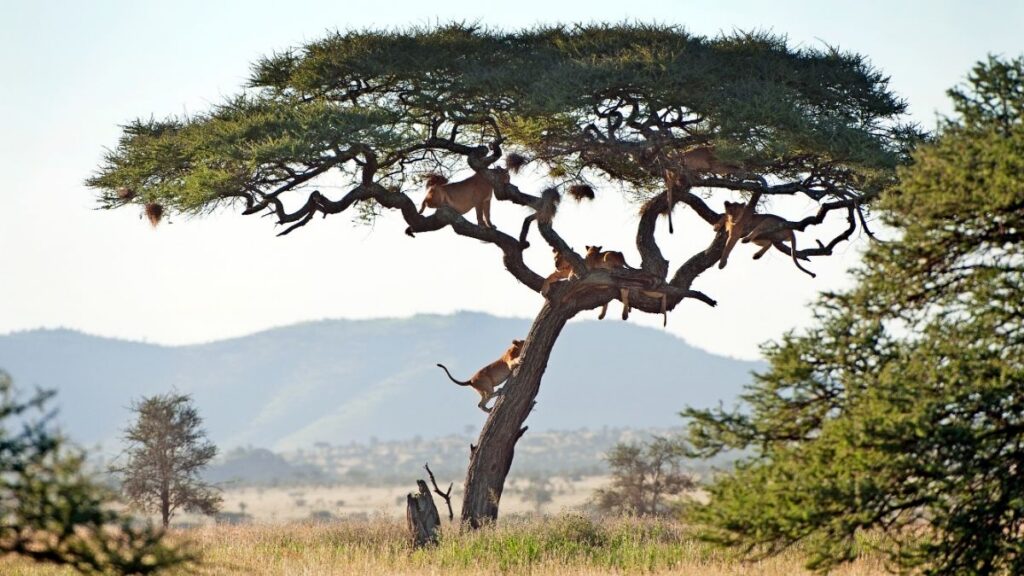
A lot of animals stick around all year in the Serengeti. Lions herd in large prides, nearly 4,000 of them. You could encounter leopards on tree branches or locate cheetahs in open grass. Female elephants create close-knit family groups, with certain relationships enduring for 50 years.
These creatures have evolved to survive the dry and rainy seasons. Water shortages test their grit, and many must graze far for food. Their presence keeps tourism afloat, with visitors aspiring to see the Big 5: lion, leopard, elephant, rhino, and buffalo.
Birdlife and Ecosystem Balance
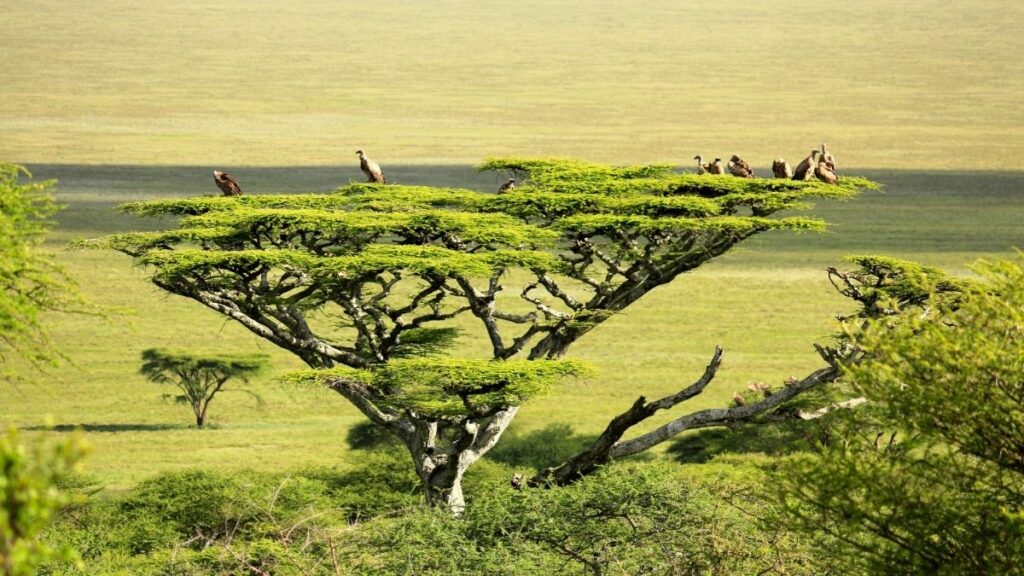
Birdlife is bountiful here. Of the 500 species thriving, there are ostriches, ground hornbills, secretary birds, and African fish eagles. Other birds, such as the weavers and sunbirds, assist in dispersing pollen and seeds, tying the cycle between flowering plants and new growth.
Migratory birds flock to the plains as a resting ground, contributing to its richness and keeping insects in check.
Plant Life
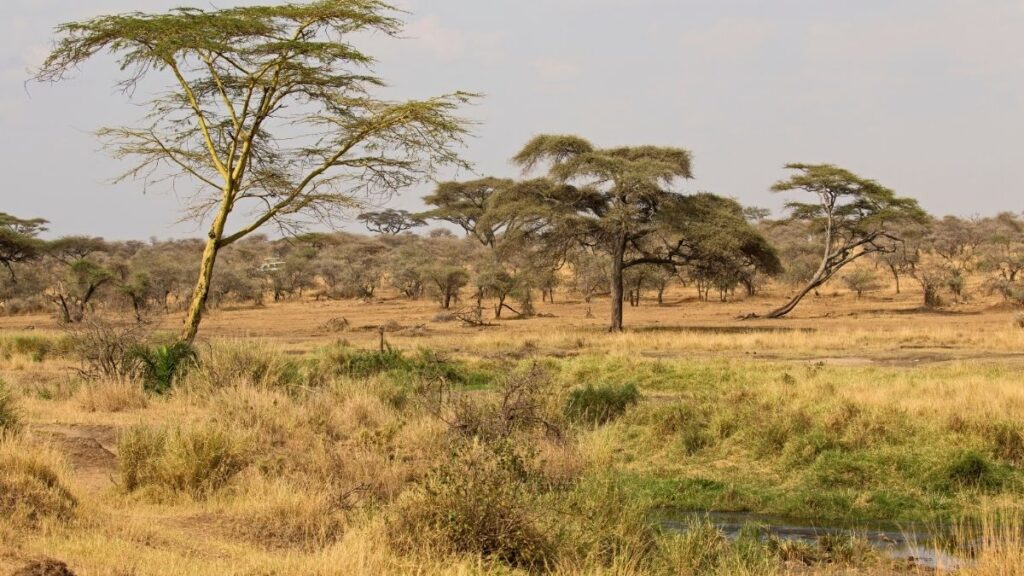
Plant life in the Serengeti is crucial. Grass blankets most of the plains, dotted here and there with acacia trees and shrubs. These plants nourish herds of elands, topis, hartebeests, buffalo, giraffes, and others.
Some, like the umbrella thorn acacia, can survive drought. Weather, particularly shifts in rain, shapes vegetation and animal diets. From termite mounds to tall grass, every inch of the landscape connects plants and animals.
Best Time to Visit the Serengeti
When to go to the Serengeti determines your entire trip. The area’s weather shifts not only how simple it is for you to find animals, but also what the earth resembles and how many individuals you’ll encounter during your journey.
The Dry Season (June and October)
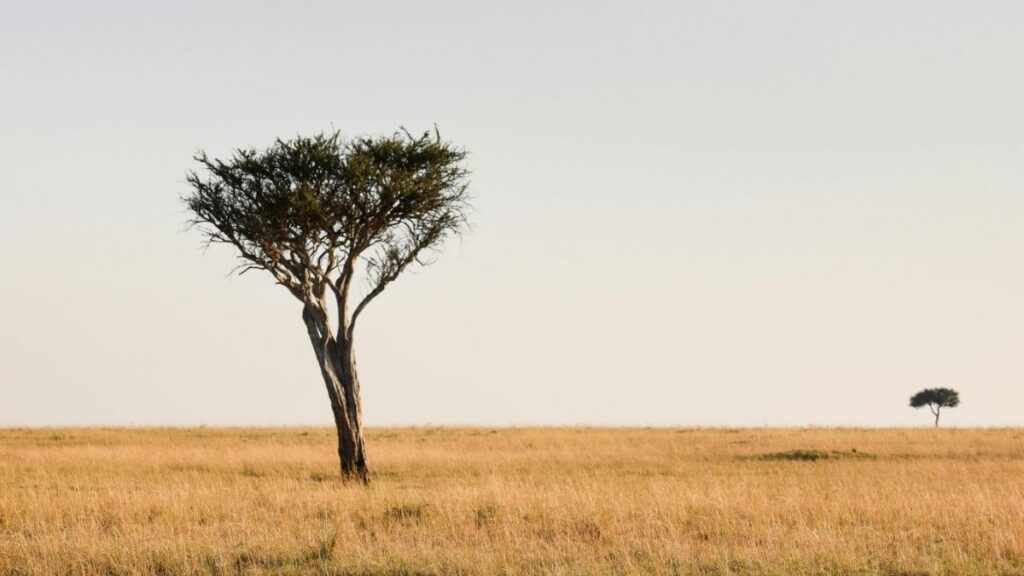
The dry season is between June and October. The grass is short here, water is hard to locate, and the animals cluster around rivers and watering holes. This means you can spot lions, elephants, and giraffes without a lot of looking. The ground is open and brown, making it simple to observe wildlife from afar.
Most days are sunny, it rains very little, and the roads remain hard beneath your feet or wheels. You’re unlikely to bog down or have to pause your journey due to mud. It’s when more people arrive, so you might encounter more tour vehicles, but you’ll have the optimal opportunity for unobstructed animal sightings you made the journey for.
The Wet Season (November to May)

They have a wet season from November to May. Rain comes and goes, the grass is tall and green and babies are all around. Birds arrive from long distances, if you’re a bird lover, this is your moment. Fewer people come during these months so the parks just feel quieter and less busy.
Some roads might be muddy, but a ton of camps and lodges remain open. The landscape is verdant and the plains appear vibrant. It’s not the prime season for viewing large herds, but you can still find a great variety of animals in smaller groups.
The Great Migration (June to July)
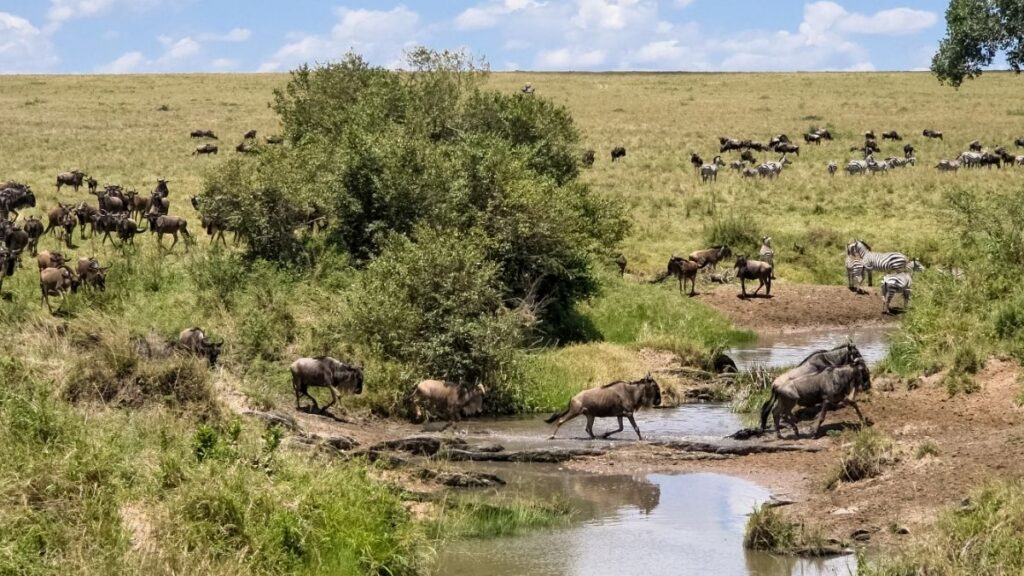
The Great Migration is the Serengeti’s headline act. From roughly June to July, thousands of wildebeest and zebras cross the Grumeti River. They head north from September to October, crossing the Mara River and delivering drama and action as the animals confront both strong currents and crocodiles.
The migration each year is a lynchpin in this system. More than a million wildebeests, accompanied by hundreds of thousands of zebras and gazelles, traverse around 1,000 kilometers annually. They circle, chasing rains and grass.
This journey attracts predators, including lions, leopards, hyenas, and cheetahs, who depend on the herds for nourishment. It is the greatest unbroken terrestrial migration on the planet.
This shifting herd nourishes lions, leopards, and numerous other predators. The migration brings every animal to the scene, and the plains come alive with sound.
Top Things to Do in the Serengeti
Spanning some 3.7 million acres of wild grassland and woodland in northern Tanzania, the Serengeti plains are difficult to comprehend until you experience it for yourself. Each section of the park, central, north, west, and south, reveals a different aspect of the scenery and animals. When you visit, you enter a place where nature remains the boss and where you experience some of the rarest sights on earth.
Game drives (morning and evening safaris)
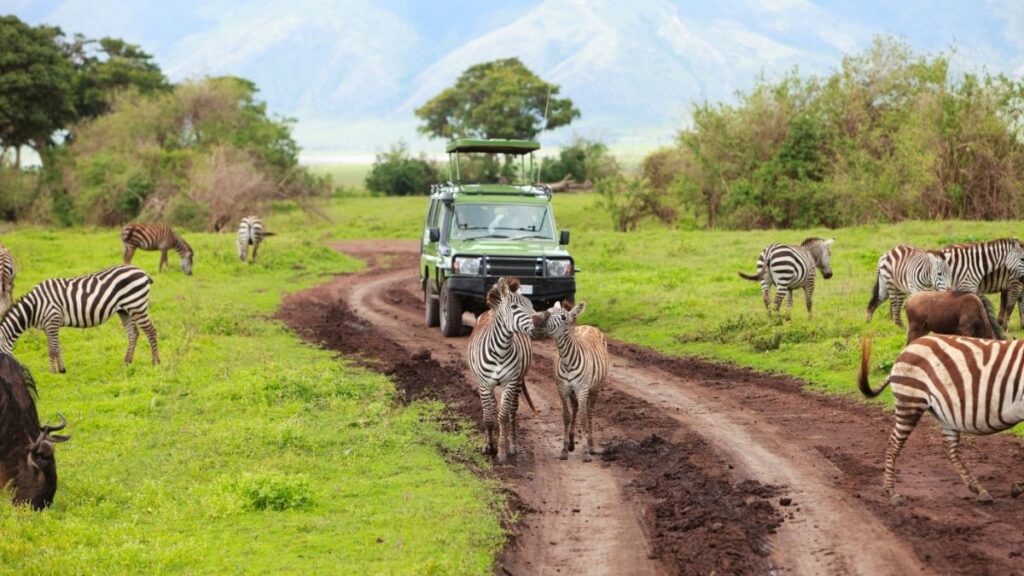
Game drives remain the primary means of experiencing the Serengeti. Morning drives reveal animals awaking and beginning their day. Evening drives are ideal for viewing predators such as lions and leopards during their hunts. Guides know where to find elephants, giraffes, baboons and even the lilac-breasted roller.
During the dry season from June to October, the grass is low and animals are simple to spot. The Great Migration’s 1.5 million wildebeest and massive zebra and gazelle herds roam across the plains and are a highlight for many.
Hot air balloon safaris over the plains
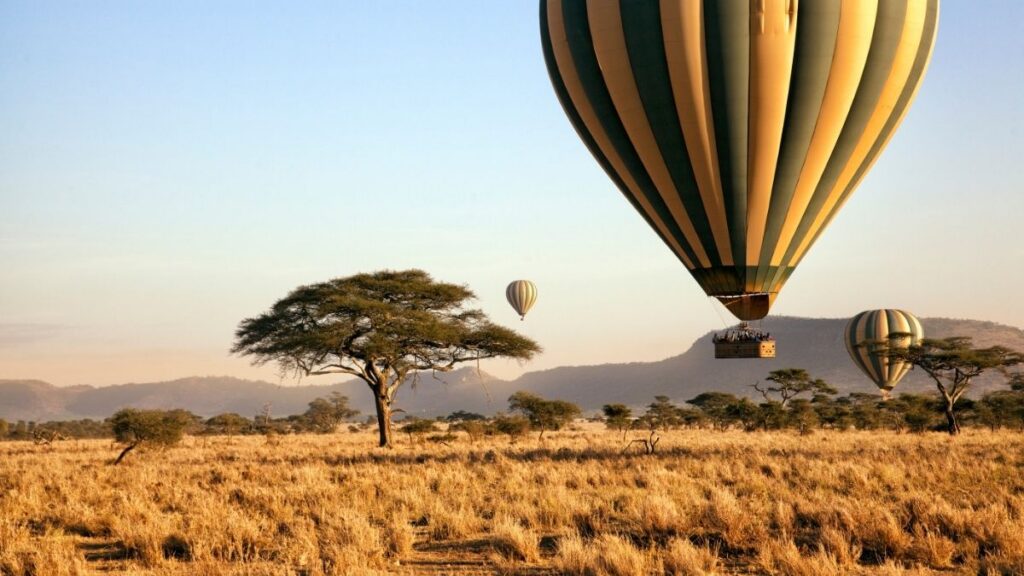
Balloon safaris provide you with an aerial perspective of the Serengeti that’s hard to beat. Floating overhead in the early morning, you watch the sunrise illuminate the vast grasslands and acacia trees. Balloon rides are only about an hour long and they cover a large area.
Perhaps you’ll glimpse migrating herds down below or solitary elephants navigating the brush. The 360-degree view is a major attraction and really lets you feel how immense and pristine the park is.
Wildlife photography
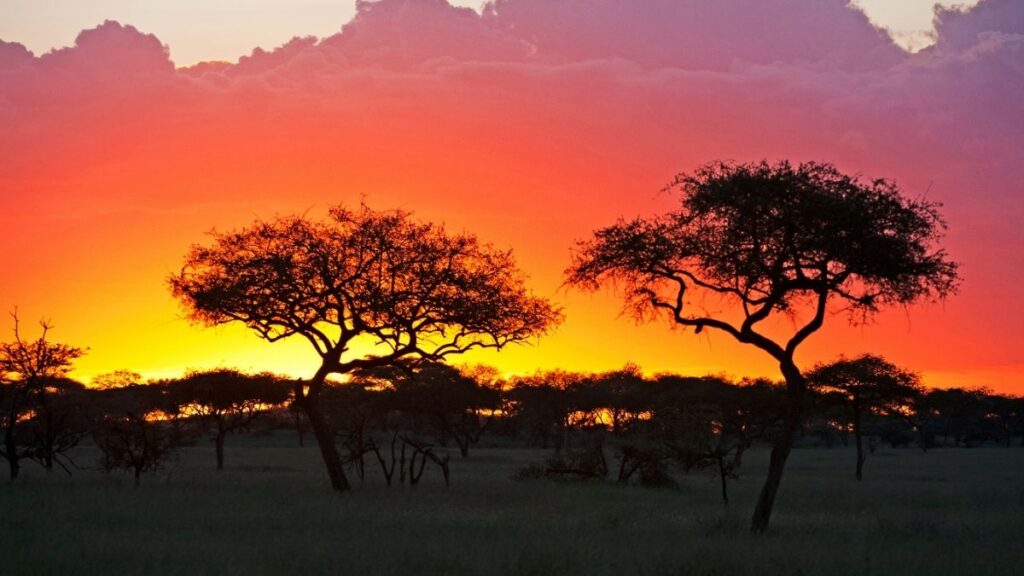
The Serengeti is a wildlife photographer’s dream. Open plains, scattered trees and changing light mean you can get good shots virtually everywhere. Be sure to take along a camera with a zoom lens to capture animals from a respectful distance.
Early and late light is best for color and detail. Each area has a unique combination of wildlife and scenery, so if possible, sample more than one region.
Cultural visits to Maasai villages
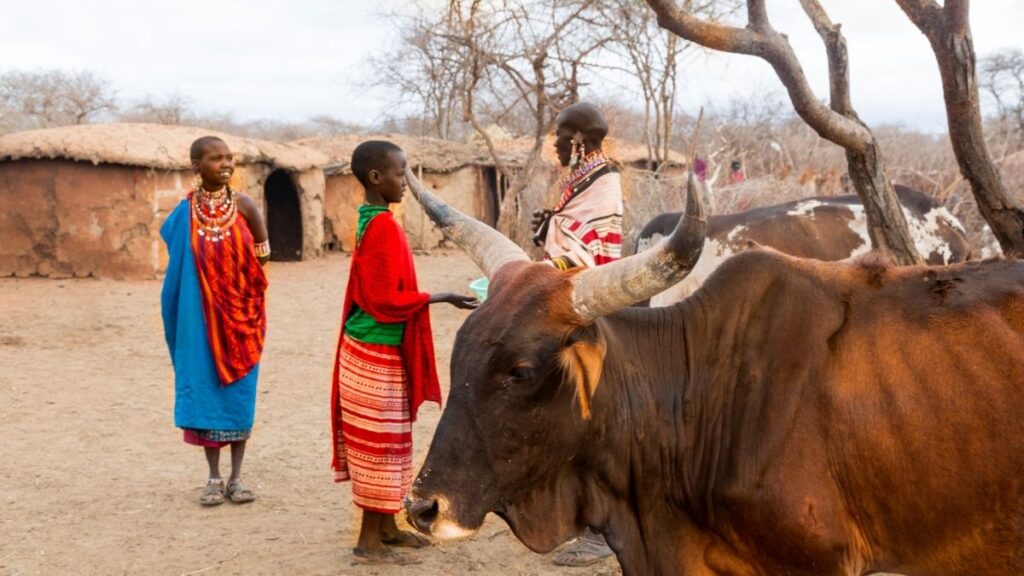
Visiting a Maasai village allows you to experience a different flavor of life in the Serengeti. The Maasai have inhabited this area for centuries and continue to preserve much of their traditional lifestyle. You can visit their villages, observe craftmaking, and enjoy traditional dance.
Tours are guided and designed to honor local culture while providing you with an authentic perspective.
Travel Tips for Visiting the Serengeti
The Serengeti plains of Tanzania attract visitors from across the globe with their expansive terrain and one-of-a-kind fauna. Planning well not only guarantees you maximize this experience but that you can maneuver it with ease.
Planning your trip
Booking your safari ahead of time is wise, in particular during popular times such as the Great Migration from June to October. If you desire fewer crowds and lower rates, consider the green season of November to March or shoulder times like early November to mid-December.
Steer clear of April and May, which are heavy rain months with impassable roads. Pack easy, neutral clothes. This allows you to feel like the others and doesn’t spook wildlife. Temperatures can swing; expect up to 25°C (77°F) in the day, dropping to 14°C (57°F) at night.
Layers work best. Make sure you bring a hat, sunscreen, and insect repellent. A good pair of binoculars and camera gear complement your visit. The Serengeti is expansive and exposed, so these gear picks aid you in spotting creatures and preserving moments.
Heed your guide’s warnings, particularly for safety. The animals are uncaged and regulations exist for your safety.
Travel Connectivity with Ubigi
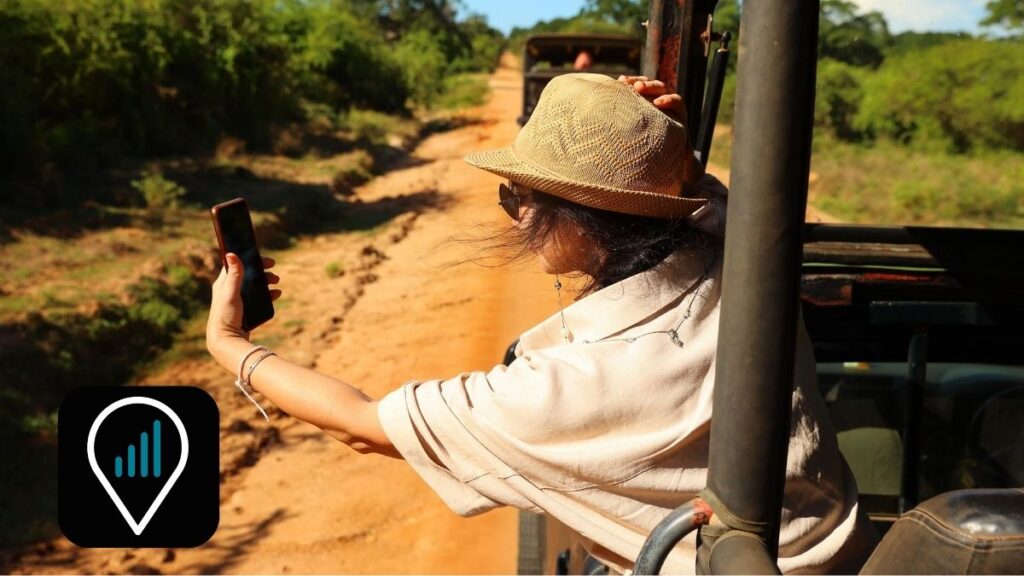
Stay connected in the Serengeti Plains and beyond. You require mobile data to handle bookings, navigate, and maintain communication with your guides or lodges. It allows you to connect and share moments with loved ones in real time.
Ubigi eSIM activates immediately once you touch down in Tanzania. There is no need to physically swap SIM cards. With prepaid, flexible plans, you pay for only what you need.
You can control and monitor your data plan directly from the app, and charge your plan even without Wifi.
You have solid data coverage in towns and on primary roads. It has you covered before and after wilderness, streamlining the logistics and making your overall trip more seamless.
Conclusion
There’s more than wild sights on the Serengeti Plains in Tanzania. Vast plains stretch for miles, teeming with wildebeests, zebras, and lions. The dry season means huge herds and clear skies, perfect for viewing the animals. The wet season colors the land green, with babies all around.
Local guide tales linger. Basic camps or cozy lodges provide you a place to sleep and absorb the noises. Consider the frost in the morning or the silence of evening migrating beasts.
Your journey is about more than just images; it’s about moments that fill your hours. For your own trek of the plains, consult reliable travel agencies or a local guide and stay connected with a Ubigi eSIM.
We hope that this article on the Serengeti Plains in Tanzania helped you!

Frequently Asked Questions
Where are the Serengeti Plains located?
Located in northern Tanzania, East Africa, the Serengeti Plains cover some 30,000 square kilometers. They are renowned for their scenic beauty and wildlife.
What animals can you see in the Serengeti?
You can observe lions, elephants, leopards, giraffes, zebras, wildebeests, and numerous birds. The Serengeti is famed for the Great Migration of wildebeests and zebras.
When is the best time to visit the Serengeti?
Visiting between June and October is optimal. This is the dry season when animals congregate around water, which facilitates easy viewing.
Is it safe to visit the Serengeti?
Yeah, it’s pretty safe going to the Serengeti if you’re abiding by park rules and with a reputable guide or tour operator. Adhere to your guide’s advice for a secure adventure.
What activities can you do in the Serengeti?
Guided safaris, witnessing the Great Migration, birdwatching, visiting local communities and hot air balloon rides are among the activities you can indulge in for a distinct perspective.
Do you need a visa to visit the Serengeti in Tanzania?
Most foreign nationals require a tourist visa to travel to Tanzania. Verify the most up-to-date information with your country’s embassy or the official Tanzanian government site prior to traveling.
What should you pack for a Serengeti safari?
Bring light, neutral-colored clothing, a hat, sunscreen and insect repellent, binoculars and a camera. Carry any personal medicines and travel documents.







 How to check eSIM compatibility
 How to check carrier unlocking